|
"Primary and secondary education is free and compulsory in Ghana between the ages of 6 and 14. In 1996, 76 percent of primary school-aged children were enrolled in school. Secondary schools enrolled just 31 percent of the appropriately aged children."
"Vocational and teacher-training institutions had 38,000 students. Higher education is provided by the University of Ghana (1948), in Legon (near Accra); the Kwame Nkrumah University of Science and Technology (1951), in Kumasi; the University of Cape Coast (1962); and the University for Development Studies (1992), in Tamale. Total university enrollment was about 9,600 in the early 1990s." (U.S. Ghana Embassy)
My additional notes on this: school is free between the ages of 6 and 14 but note that there are VERY FEW PUBLIC SCHOOLS and ALL of them are overcrowded. And not what we here in the US consider overcrowded, MUCH WORSE. Therefore parents are forced to send their kids to one of the hundreds or probably even thousands of private schools available and have to PAY for education because of the lack of actual public schools. The percentages listed above likely include both public AND private schools.
This is due to a continual build up of school fees over the years. Many families can not pay the secondary school fees in full by the time the child excels to the next grade level. When a family gets so far behind, the child is "sacked" and is refused to enter the school grounds until a substantial amount of fees are paid.
When a child gets so far behind in fees that they can not attend school, they will then generally enter the work force full time. The family then becomes reliable on the additional income and education quickly loses its importance.
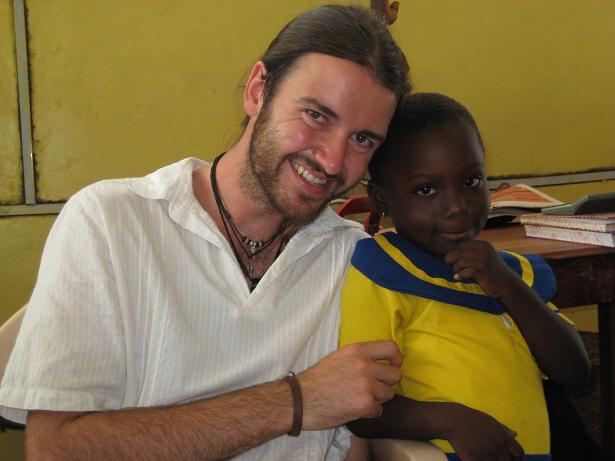
Through working together, we can help to raise these percentages and continue to build the future of a child, a family, a country, a continent, and eventually the world.
|